Every day, ecommerce distribution centers process thousands of online orders. Customers expect every product shown as available online to be picked, packed and shipped within hours.
During peak sales periods, that challenge becomes even greater. Inventory moves faster, order volumes increase and discrepancies become more frequent. When physical inventory and WMS (Warehouse Management System) records fall out of sync, products that are still inside the warehouse can be reported as out of stock.
The result? Orders are cancelled even though the inventory may still be there.
A stockout does not always mean that the product is actually gone. Sometimes, the system has simply lost track of it.
When the system says zero, the sale disappears
In a distribution center, inventory is constantly moving. Products arrive, change locations, are picked for orders and leave the facility at high speed. During peak sales periods, like seasonal sales, this movement intensifies, increasing the risk of discrepancies between what is physically in the warehouse and what the WMS records.
In many cases, what appears to be a stockout is actually an inventory visibility problem. The WMS may show no available stock for a SKU while physical units are still present somewhere in the distribution center. If those units cannot be identified and located in time, they are effectively unavailable for fulfillment.
From an operational perspective, this creates an immediate problem. If the system says there is no stock available, the order cannot be fulfilled. A customer who was ready to buy sees their order cancelled, not necessarily because the inventory has been sold, but because it cannot be located in time.
Meanwhile, the missing unit may remain in the warehouse, effectively unavailable for sale until it is found and the inventory record is corrected.
The impact goes beyond one cancelled order
A cancelled sale is the most visible consequence of a stockout, but the impact extends much further across warehouse operations.
Lost sales directly affect revenue, particularly during peak periods when demand is at its highest. Products that remain unlocated can also become harder to sell later, increasing the risk of markdowns, damage or disposal and contributing to unnecessary waste.
There is also a significant impact on operational workload. When teams cannot fully rely on inventory records, operators need to carry out manual stock audits to confirm whether units are actually unavailable. And during peak periods, when inventory is moving faster and errors are more likely to occur, these audits may need to become even more frequent.
This creates a difficult cycle: higher order volumes increase the risk of misplaced inventory, while the resulting discrepancies create more manual work for teams that are already operating under pressure.
Ultimately, inventory accuracy is connected to much more than stock management. Fulfilment promises, customer trust, labour planning and revenue all depend on the system accurately reflecting what is physically happening inside the distribution center.
From manual checks to continuous inventory visibility
Closing the gap between physical inventory and system inventory requires more than reacting to discrepancies once an order has already been cancelled.
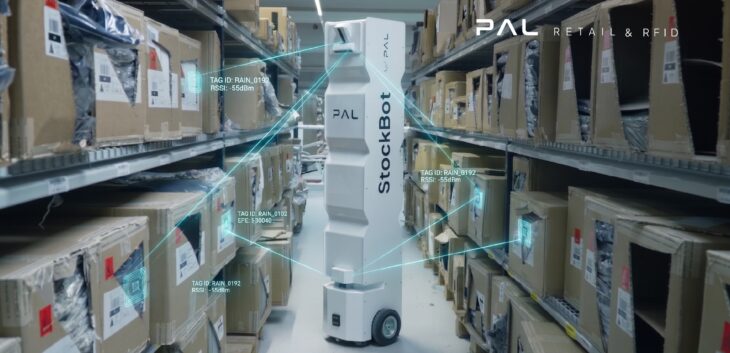
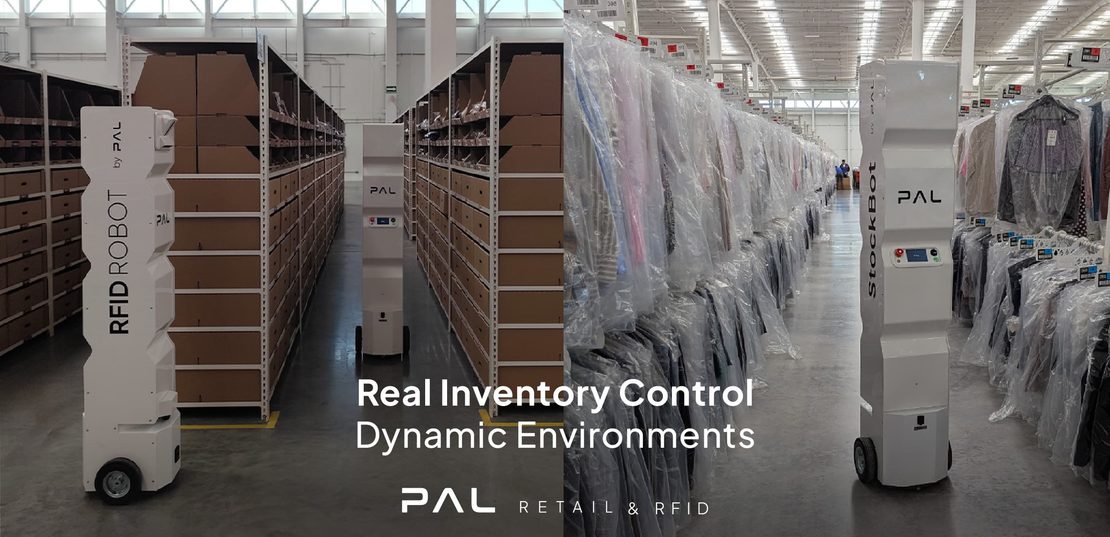
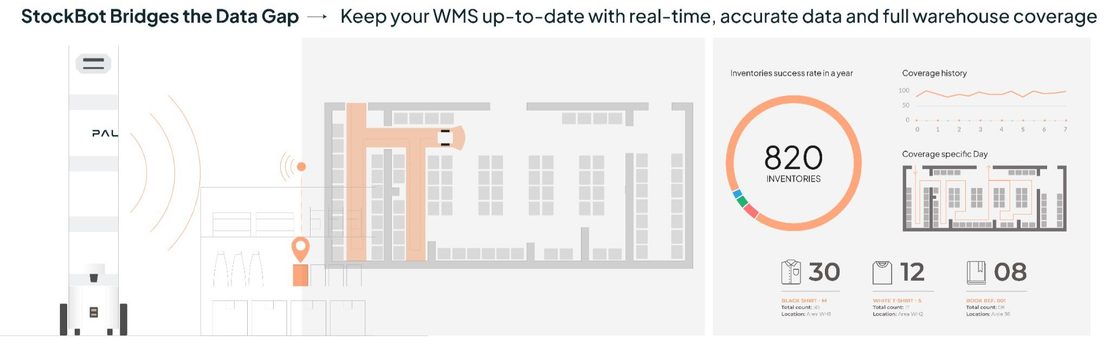
StockBot combines autonomous robotics with RAIN RFID technology to identify inventory throughout the distribution center. By collecting stock data more frequently, it helps warehouse teams gain greater visibility of the products physically present in the facility, and identify discrepancies between real inventory and WMS records.
Instead of relying primarily on repetitive manual audits to verify whether stock is still available, teams can use more accurate inventory information to locate missing units and investigate discrepancies before they lead to further cancellations.
The objective is not simply to automate an inventory count. It is to provide reliable, actionable data that helps warehouse teams make better operational decisions.
Proven in practice: what happens when inventory becomes more reliable?
The impact of this approach can be seen in comparisons between distribution centers operating with StockBot and those operating without it.
In head-to-head comparisons:
- 50% fewer stockout-related incidents during peak sales periods compared with distribution centers operating without StockBot
- 35% lower cancellation rate over the analysed period in distribution centers using StockBot, showing sustained improvements in inventory reliability rather than a short-term effect
- Manual audits cut in half, with distribution centers using StockBot operating at 50% of the audit workload of those without it
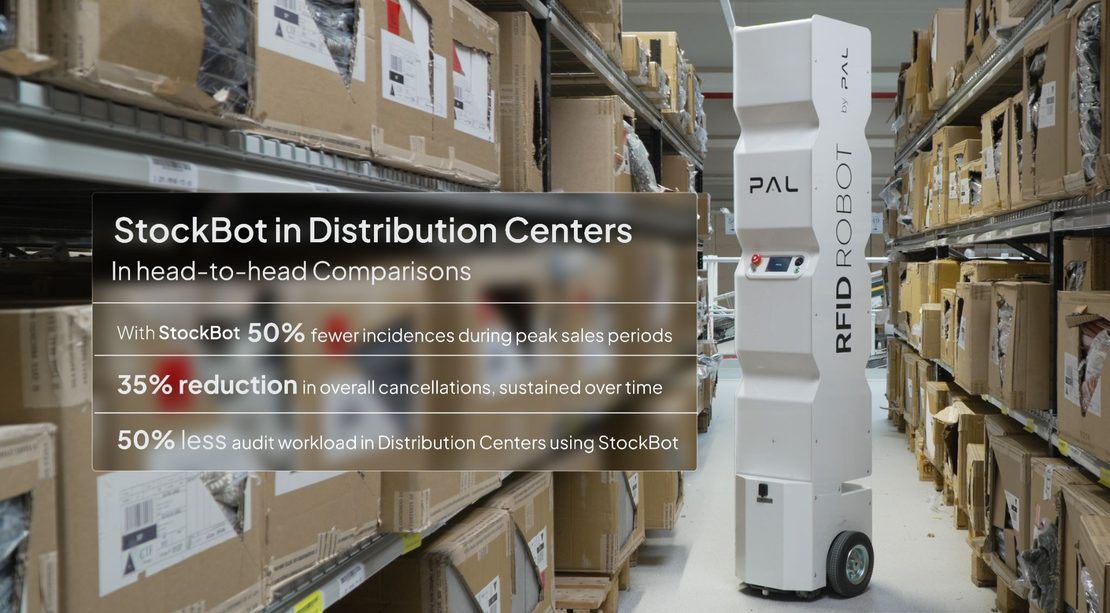
These results show how better inventory visibility can affect both customer-facing and internal operations. Fewer stockout-related incidents mean fewer high-intent sales are lost, while reducing manual audits frees teams from repetitive stock checks and lowers the operational effort required to maintain accurate inventory information.
At the same time, locating more of the inventory already inside the distribution center helps make better use of available stock, reducing the risk of products remaining unsold, marked down or discarded.
Inventory accuracy when it matters most
Peak sales periods will always bring additional pressure to ecommerce distribution centers. More orders mean faster inventory movement, tighter fulfilment deadlines and greater potential for discrepancies.
What does not have to increase with that pressure is the gap between what the WMS records and what is actually inside the warehouse. With more frequent and accurate inventory data, warehouses can identify discrepancies earlier, reduce unnecessary cancellations and spend less time verifying stock manually.
Because when demand is at its highest, every product that is already inside the distribution center should have the opportunity to become a fulfilled order.
Discover how StockBot helps distribution centers turn hidden inventory into available stock, reduces manual audits and protects more orders from cancellation.
Want to see how RAIN RFID and autonomous robotics are improving inventory accuracy in real-world operations? Join PAL Robotics at RAIN in Action 2026, from September 29 to October 1 in Madrid, and discover StockBot in action.